
Remote mining sites across Australia face a common challenge: getting fully functional electrical systems operational quickly and reliably in locations hundreds of kilometres from the nearest service centre. Traditional approaches, where components arrive separately from multiple vendors and must be assembled, wired, and tested on-site, expose projects to weather conditions, workforce constraints, and quality variables that can push commissioning dates out by weeks or months.
This is where electrical integration and modularisation changes the equation. By shifting assembly, wiring, and testing to controlled workshop environments, mining operations receive systems that are already proven to work before they ever reach site. The result is faster installation, reduced rework, and fewer surprises during commissioning.
This guide covers everything you need to know about remote-ready electrical integration for mining in 2026: the core principles, the practical benefits, and the specific considerations that determine success or failure when deploying modular electrical systems in challenging Australian environments.
Key Takeaways: Remote-Ready Mining Integration in 2026
What Is Electrical Integration and Modularisation for Mining?
Electrical integration and modularisation involves designing, assembling, and testing complete electrical systems off-site before shipping them to remote locations. Instead of receiving individual components that must be wired and configured on-site, you receive functional modules that are ready for final connection and commissioning.
A typical modular electrical package might include switchboards, motor control centres, control panels, and instrumentation, all pre-wired and mounted on a skid or housed in a transportable enclosure. The system arrives having already passed functional testing, with all documentation, inspection records, and compliance certificates in place.
For mining and industrial operations, this approach addresses several persistent challenges: limited access to skilled tradespeople in remote areas, exposure to harsh weather during on-site assembly, and the coordination complexity that comes with multiple vendors supplying different system components.
Why Remote Mining Operations Demand a Different Approach
Remote mining sites operate under constraints that make traditional construction methods expensive and risky. Mobilising specialised electricians to locations in the Pilbara, Goldfields, or Murchison regions involves significant logistics costs. Once on-site, work crews face extreme temperatures, dust, and limited accommodation capacity.
According to S&P Global’s 2026 Mine Cost Outlook, total cash cost per tonne of ore treated rose 27.8% between 2021 and 2024. A significant portion of this increase stems from labour costs and project schedule overruns. Every day a system sits waiting for commissioning represents lost production and increased holding costs.
Remote sites also lack the fallback options available in urban environments. If a component fails during on-site assembly, replacement parts may take days or weeks to arrive. This vulnerability makes pre-testing and quality assurance before dispatch critically important.
How Does Pre-Tested Site-Ready Delivery Reduce Risk?
Pre-tested delivery means verifying that every electrical system functions correctly before it leaves the workshop. This includes functional testing of control logic, verification of wiring continuity, calibration of instrumentation, and full documentation of test results.
Factory Acceptance Testing (FAT) provides the formal process for this verification. During FAT, clients can witness testing procedures, review documentation, and confirm that systems meet specified requirements. Any issues identified during FAT can be resolved in the workshop, where resources, tools, and expertise are readily available.
The alternative, discovering problems after equipment reaches a remote site, typically involves extended downtime while solutions are developed and implemented. In remote locations, even minor issues can cascade into major schedule impacts.
What Components Make Up a Modular Electrical Package?
Modular electrical packages vary based on application, but common components include power distribution equipment, motor control systems, programmable logic controllers, instrumentation and sensors, and communication interfaces.
Switchboards and Motor Control Centres
Switchboards manage the distribution of electrical power across a site or system. Motor control centres (MCCs) house the starters, drives, and protection devices that control rotating equipment. Both are well-suited to modular fabrication because they involve extensive internal wiring and testing requirements.
APS Group’s electrical manufacturing capabilities include complete switchboard and MCC fabrication, with all wiring, labelling, and testing completed in-house before dispatch.
Control Panels and Instrumentation
Control panels house the programmable logic controllers (PLCs) and human-machine interfaces (HMIs) that automate system operation. Instrumentation, including flow meters, pressure transmitters, and level sensors, must be correctly installed, wired, and calibrated for the control system to function as designed.
Integration means these components arrive already connected, with software loaded and configured. Commissioning then focuses on verifying site-specific parameters rather than building the system from scratch.
Communication and Telemetry Systems
Remote operations increasingly rely on telemetry and SCADA systems to maintain visibility without requiring constant on-site presence. These systems transmit operational data to remote control rooms, enabling monitoring, diagnostics, and in some cases remote control of equipment.
For truly remote sites, communication systems may incorporate satellite, radio, or cellular technologies, often with solar and battery backup to ensure connectivity even when primary power is unavailable.
What Are the Key Stages of Integrated Project Delivery?
Integrated project delivery follows a structured sequence that maximises workshop preparation and minimises on-site installation time.
Design and Engineering
The process begins with detailed design and engineering to define system requirements, component specifications, and interface details. Electrical schematics, layout drawings, and cable schedules are developed and reviewed with the client before fabrication begins.
This upfront investment in design ensures that components fit together correctly and that all site-specific requirements are captured in the workshop fabrication scope.
Fabrication and Assembly
With approved designs in hand, fabrication proceeds in a controlled workshop environment. Structural elements, enclosures, and mounting hardware are fabricated to exact specifications. Electrical components are installed, wired, and labelled according to approved drawings.
Workshop fabrication offers advantages that are difficult to replicate on-site: climate control, overhead craneage, access to specialised tools, and proximity to technical resources for resolving issues.
Programming and Configuration
For systems involving PLCs and automation, programming and configuration occur during the fabrication phase. Software is loaded, logic is tested, and HMI screens are configured before the system ships.
This approach allows software engineers to work in an environment with reliable internet access, development tools, and collaboration with the broader engineering team.
Testing and Factory Acceptance
Before dispatch, systems undergo thorough testing. This includes point-to-point wiring checks, insulation resistance testing, functional testing of control logic, and verification that documentation matches as-built configuration.
Factory Acceptance Testing formalises this process, providing a structured opportunity for clients to witness testing and confirm that systems meet requirements before shipment.
Logistics and Site Delivery
Transport planning for modular systems requires attention to route constraints, including bridge load limits, road widths, and permit requirements. Systems are packaged to protect against damage during transport, with lifting points and handling instructions clearly marked.
Arriving at site with documentation complete and systems tested means installation crews can focus on positioning, final connections, and commissioning rather than problem-solving.
Installation and Commissioning
On-site work focuses on positioning modules, connecting services (power, communications, and process interfaces), and verifying system performance. With pre-testing complete, commissioning typically proceeds faster and with fewer issues than traditional build-on-site approaches.
Site Acceptance Testing (SAT) provides the formal sign-off that systems are performing as required in their installed location.
Why Is Full Traceability Important for Remote Mining Projects?
Traceability means maintaining documented records that link every component, weld, inspection, and test result back to specific materials, personnel, and procedures. For mining operations, this documentation supports compliance with regulatory requirements and provides a reference for future maintenance and troubleshooting.
Full traceability includes weld maps showing welder qualifications and procedures used, consumable tracking linking materials to specific batches, inspection test plans documenting hold points and verification methods, and calibration records for instrumentation.
APS Group maintains quality management systems aligned with ISO 9001, ensuring that documentation practices meet industry expectations and regulatory requirements.
How Do Renewable Energy Systems Fit Into Remote Mining Integration?
Remote mining operations increasingly incorporate renewable energy to reduce diesel consumption and improve energy security. According to pv magazine, Australian remote mining operations are now consistently achieving renewable energy penetration rates above 80%, demonstrating that high-renewable systems can reliably support energy-intensive industrial operations.
At Lynas Rare Earths’ Mount Weld operation in Western Australia, a hybrid power system achieved a 95.7% renewable energy share in the March 2026 quarter, reducing diesel use by more than 870,000 litres compared to the previous year. Bellevue Gold’s mine site achieved a record 155 consecutive hours of engine-off operations, running entirely on renewable energy.
Integrating renewable energy systems with modular electrical infrastructure requires careful attention to energy storage, power quality, and system controls. Battery energy storage systems must be sized to handle load variations and provide backup during periods of low generation. Power electronics must manage the interface between DC solar generation and AC distribution systems.
What Should You Look for in an Integration Partner?
Selecting an integration partner for remote mining electrical systems involves evaluating several key capabilities.
In-House Multidisciplinary Capabilities
Look for partners who bring together fabrication, electrical, and mechanical capabilities under one roof. This reduces interface risks between disciplines and enables better coordination during design and fabrication.
APS Group’s Integration division brings together in-house fabrication and electrical teams to deliver fully assembled, pre-tested modules. This cross-discipline approach means structural, mechanical, and electrical elements can be coordinated throughout fabrication.
Experience with Remote Australian Conditions
Partners with experience delivering to remote Australian sites understand the specific challenges involved: extreme temperatures, dust, logistics constraints, and limited on-site support resources. This experience informs design decisions, material selection, and packaging approaches.
Quality Management and Documentation
Robust quality management systems ensure that documentation requirements are met and that fabrication processes deliver consistent results. ISO 9001 alignment provides a baseline for process control and ongoing improvement.
Testing and Commissioning Support
Complete testing before dispatch reduces commissioning risk, but some partners also offer on-site commissioning support to ensure smooth handover. This continuity between workshop and site teams can accelerate the path to full operation.
How Does Integrated Delivery Improve Project Timelines?
Project timeline improvements from integrated delivery stem from several factors working together.
Parallel workstreams become possible when fabrication occurs off-site. While civil and structural work proceeds at the mine site, electrical modules can be fabricated in the workshop. This parallel approach compresses overall project duration compared to sequential on-site construction.
Reduced on-site labour requirements mean less accommodation demand, fewer logistics runs, and reduced exposure to the factors that delay site work: weather, access restrictions, and workforce availability.
Fewer on-site unknowns result from pre-testing. When systems arrive proven to work, commissioning focuses on site integration rather than problem-solving. Issues that would have caused extended site delays are instead resolved in the workshop, where resources and expertise are more accessible.
What Documentation Should Accompany Modular Electrical Systems?
Complete documentation packages typically include as-built drawings reflecting final system configuration, electrical schematics and wiring diagrams, test reports from factory acceptance testing, inspection records including hold point sign-offs, equipment manuals and maintenance instructions, calibration certificates for instrumentation, and compliance certificates relevant to applicable standards.
This documentation serves multiple purposes: supporting commissioning activities, providing reference for future maintenance, demonstrating compliance with regulatory requirements, and enabling troubleshooting when issues arise during operation.
What Are Common Applications for Modular Electrical Systems in Mining?
Modular electrical integration applies across a wide range of mining applications.
Pump Control and Dewatering Systems
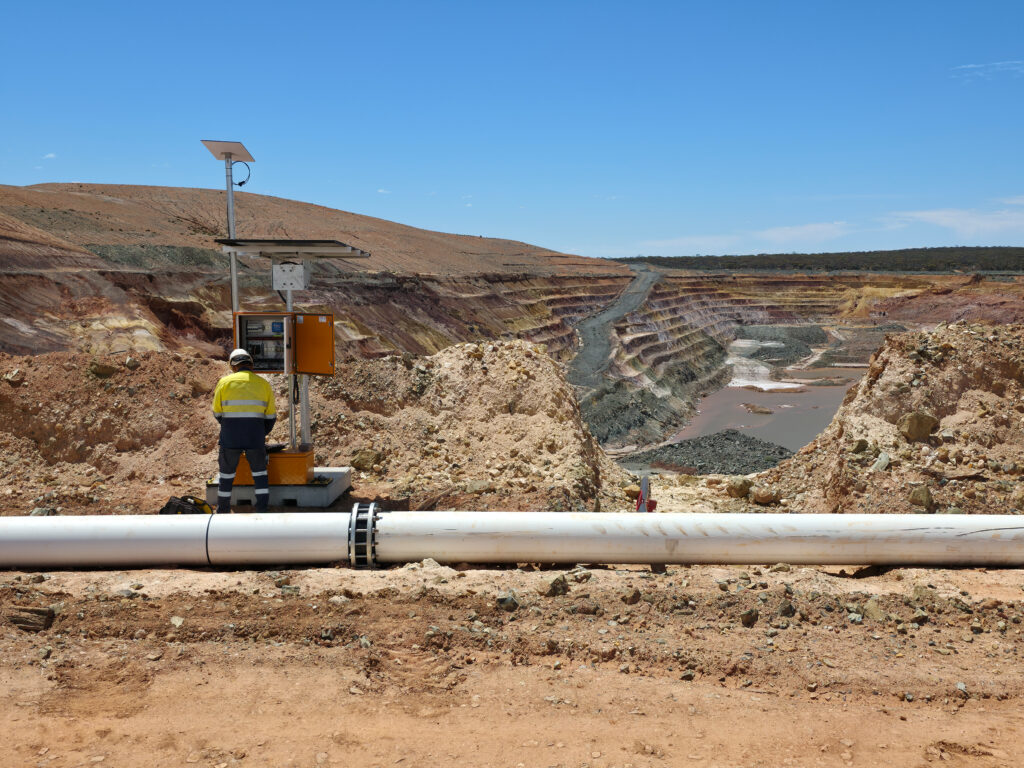
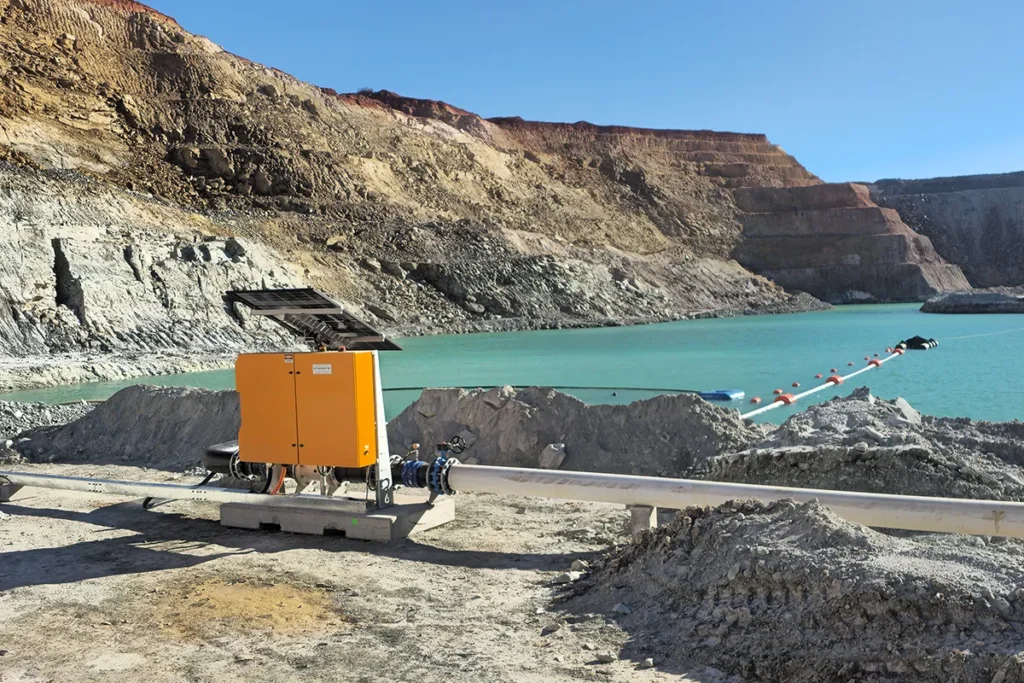
Pit dewatering systems must operate continuously and reliably to maintain safe working conditions. Skid-mounted pump control systems, pre-wired with variable speed drives, protection devices, and telemetry interfaces, can be deployed rapidly when water management needs change.
APS Group has delivered multiple integrated pump control systems for mining clients, including dual-pump control systems with full remote monitoring capability.
Switchrooms and E-Houses
Transportable switchrooms house complete power distribution and control systems in weatherproof, temperature-controlled enclosures. These can be fabricated complete with switchboards, MCCs, and climate control systems, then transported to site and connected to incoming power and outgoing distribution.
Conveyor and Materials Handling Controls
Materials handling systems involve distributed motor control, instrumentation, and safety systems. Modular control packages can be fabricated and tested as complete systems, then shipped to site for installation along the conveyor route.
Process Plant Electrical Systems
Process plants involve extensive electrical infrastructure spanning multiple systems: crushing, screening, flotation, pumping, and utilities. Modular approaches can apply to individual system packages, allowing staged installation and commissioning.
How Can Remote Monitoring Extend the Benefits of Modular Integration?
Remote monitoring systems transmit operational data from site equipment to control rooms that may be located hundreds of kilometres away. This capability reduces the need for constant on-site personnel while maintaining visibility of system performance.
Modern telemetry systems can transmit equipment status, alarm conditions, trend data, and diagnostic information. Operators can monitor multiple sites from a single location, with alerts configured to notify relevant personnel when intervention is required.
For truly remote sites, telemetry may rely on satellite or radio communication links. Integrating these communication systems with modular electrical packages ensures they arrive at site ready to connect, with antennas, modems, and power supplies already installed and configured.
What Quality Standards Apply to Modular Electrical Systems for Mining?
Australian mining electrical systems must comply with relevant standards covering electrical safety, equipment ratings, and installation requirements. Key standards include AS/NZS 3000 (Wiring Rules), AS/NZS 61439 (Switchgear and controlgear assemblies), and applicable mining-specific regulations.
Quality management systems aligned with ISO 9001 provide the framework for consistent processes, documented procedures, and continuous improvement. For mining clients with stringent documentation requirements, these systems ensure that fabrication and testing practices meet expectations.
Client-witnessed factory acceptance testing adds another layer of quality assurance, allowing project teams to verify compliance before equipment ships to site.
In Conclusion: Building Success Through Integrated Electrical Delivery
Remote mining operations demand electrical systems that work reliably from day one. The traditional approach of assembling and testing systems on-site exposes projects to variables that are difficult to control: weather, workforce availability, and the challenges of problem-solving in isolated locations.
Electrical integration and modularisation shifts this work to controlled workshop environments where quality can be assured, testing can be thorough, and documentation can be complete before systems ever reach site. The result is faster commissioning, reduced rework, and greater confidence that systems will perform as designed.
For project owners and industrial contractors managing remote Australian mining projects, partnering with an experienced integration specialist can reduce delivery risk and simplify the path to operational readiness. The investment in pre-fabrication and testing pays dividends when systems arrive site-ready, documented, and proven to work.
FAQs about Remote-Ready Mining Integration in 2026
What is the difference between modular and traditional on-site electrical installation?
Traditional installation involves assembling, wiring, and testing electrical systems at the mine site. Modular installation shifts these activities to a workshop, where systems are fully assembled and tested before shipping. This reduces on-site labour requirements, improves quality control, and compresses commissioning timelines. APS Group delivers pre-tested modules that arrive site-ready.
How long does Factory Acceptance Testing typically take?
Factory Acceptance Testing duration depends on system complexity. Simple control panels may require a few hours, while complete switchrooms with multiple systems may need several days. The investment in thorough FAT reduces the risk of extended on-site troubleshooting, making it worthwhile regardless of system size.
Can modular electrical systems be modified after installation?
Yes, modular systems can be expanded or modified to accommodate changing requirements. Designing systems with future expansion in mind, including spare capacity in switchboards and provisions for additional circuits, makes modifications easier. Complete as-built documentation supports future engineering work.
What makes APS Group’s integration approach different for remote mining sites?
APS Group brings together in-house fabrication and electrical capabilities under one roof, reducing coordination between separate vendors. This integrated approach ensures structural, mechanical, and electrical elements work together correctly. Every system receives full electrical and functional testing before dispatch, with complete documentation including QA packs and compliance certificates.
How does remote monitoring reduce operating costs for mining electrical systems?
Remote monitoring reduces the need for frequent site visits by providing visibility of equipment status from control rooms that may be hundreds of kilometres away. Operators can monitor alarms, trend data, and system performance without dispatching personnel. APS Group integrates telemetry and SCADA interfaces into modular packages, ensuring communication systems arrive ready to connect.
What documentation should I expect with a modular electrical package?
Documentation packages typically include as-built drawings, electrical schematics, factory acceptance test reports, inspection records, equipment manuals, calibration certificates, and compliance certificates. APS Group’s quality management system ensures documentation meets ISO 9001 standards and client specifications.